
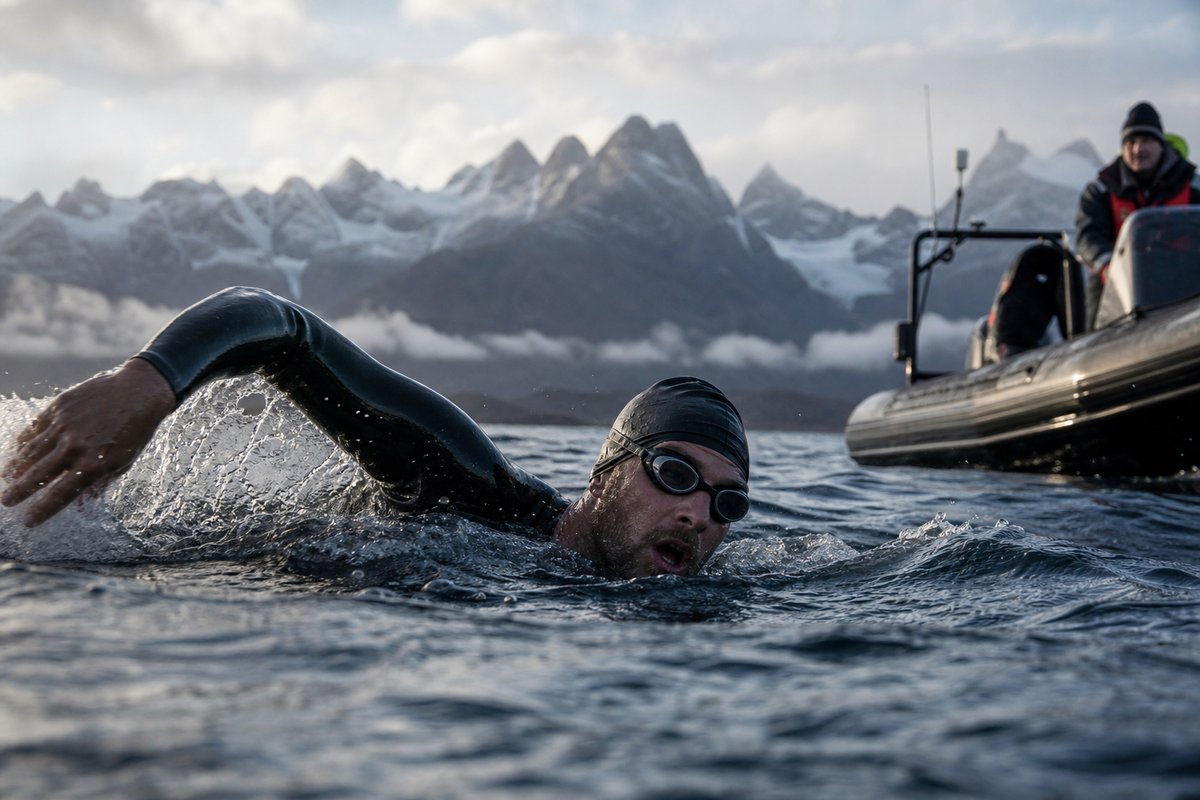
Rob Lea’s path to becoming the first person to complete the 7 Seas, 7 Summits challenge did not follow the kind of hyper-optimized blueprint many endurance athletes might expect. According to the report, the Utah-based realtor and former elite triathlete leaned less on watches, rigid training blocks, or detailed performance data, and more on feel, experience, and a long-earned ability to stay in the zone for extended efforts.
His journey began after an ankle reconstruction in 2017, when he decided he needed a new goal beyond rehab. Lea had already built a serious athletic résumé, including winning the 70.3 triathlon World Championship in 2012 and competing as an All-American swimmer at UC Davis. He first set his sights on the English Channel, then started reading about whether that swim or Mount Everest was the tougher test. That question pushed him into a bigger challenge: in 2019, he climbed Everest and swam the English Channel within six months of each other, while also fitting in a cross-country bike ride that same year.
Those efforts became part of the broader Double Seven project, which combines the Seven Summits with the Oceans 7, a set of iconic channel swims. Lea had already climbed Aconcagua in 2009 and Denali in 2010, and the final piece came on June 30 with his crossing of the Tsugaru Strait. The report says that made him the first person to finish the full 7×7 challenge, a project that took 17 years to complete.
Even with such a massive undertaking, Lea’s preparation was surprisingly practical. For the cold-water swims, he focused heavily on building tolerance through cold baths, swimming in cold water, and even putting on weight to help him handle the temperatures. On the mountain side, he and his wife did technical training to get more comfortable in high-altitude conditions. He also kept nutrition straightforward, using a planned feeding schedule, a set calorie target, and liquid feeds during swims so currents would not erase his progress.
Lea said age changed the process mostly because life got busier, leaving less time to train than when he started in his late 20s. He also acknowledged that failure was always possible, but he tried not to dwell on it. That mindset, he said, helped him keep going even after difficult moments, including a 2025 Molokai Channel swim that led to a diagnosis of swimming-induced pulmonary edema after he finished and went to an ER. Even after that experience, he returned to the water for the final Tsugaru Strait crossing, knowing conditions and even his own body could still derail the attempt.
Source: menshealth.com