
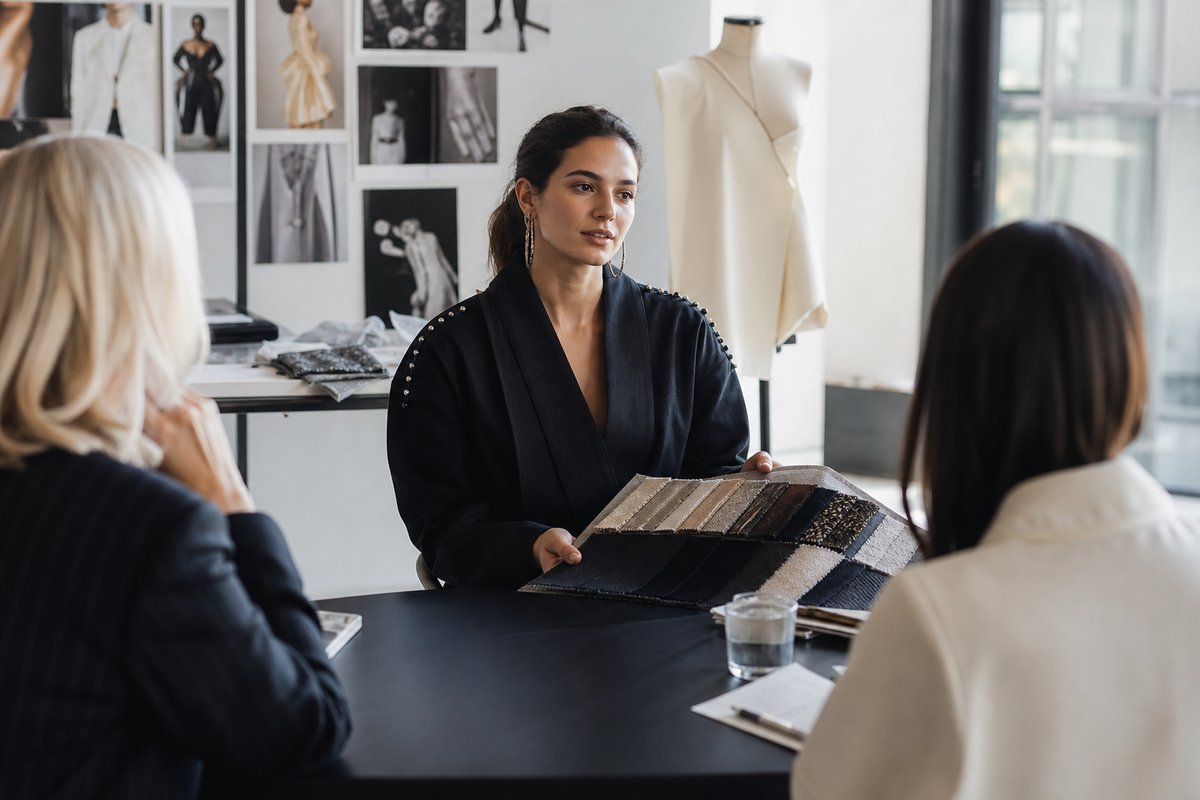
With artificial intelligence now able to handle much of the job-application process, the face-to-face interview has become even more important in fashion hiring. According to the report, employers and applicants are both navigating new questions about how much AI should be used, and whether it can blur the line between polish and authenticity. Daniel Peters, who founded Fashion Minority Report after working at Burberry and Selfridges, says candidates who lean too heavily on AI may struggle to speak naturally about their own experience once they are in the room.
For students and recent graduates, that makes the interview a rare chance to stand out. The article notes that AI-generated applications can make candidates look increasingly similar, while an in-person meeting allows designers to bring something tangible to the table. Parsons graduate Quinn Fertig says she values interviews because she can present physical work, especially since her designs rely heavily on texture and color. Career advisers also encourage applicants to show their process, while creative director Nicolas Aburm of Area emphasizes that candidates should be precise about their contributions rather than overstating what they did.
What you wear is part of the conversation
In fashion, interview dressing is not treated as a minor detail. Fertig says she plans her outfits carefully and often wears her own designs, even describing one pleated skirt she made for a pitch competition before going on to win it. She believes dressing in a way that reflects the company is important, and that clothing can help break the ice while also revealing how a candidate thinks creatively. In her view, an outfit can function almost like an extension of a portfolio, showing a manager how someone translates ideas into form.
The report also highlights how storytelling can shape an interview. Peters argues that AI may open doors for applicants who are neurodivergent or otherwise underserved, but he still encourages candidates to build a clear narrative around who they are and what they can do. He points to personal histories, family craft traditions, and early creative experiences as useful material. He also cites Tavi Gevinson’s early fashion blogging as an example of a self-made journey that created momentum. Finally, headhunter James Stuart advises job seekers to research employers as carefully as companies research them, including the culture and leadership style of the organization.
Source: vogue.com